Carbon Steel vs. Stainless Steel Belts & Single-Belt vs. Double-Belt Flakers: A Buyer’s Comparative Guide for 2026 Industrial Processing
Introduction: The Procurement Dilemma for Industrial Buyers in 2026
For industrial procurement specialists in the chemical, food processing, and advanced materials sectors, selecting the correct steel belt and processing equipment is not just a purchase; it is a strategic decision that impacts production efficiency, product quality, and total cost of ownership. As global supply chains continue to evolve in 2026, buyers are frequently faced with two fundamental decisions: material choice (Carbon Steel vs. Stainless Steel belts) and system configuration (Single-Belt vs. Double-Belt cooling/flaking systems). Furthermore, sourcing from a Chinese integrated manufacturer like BPS/EPS (www.bpstek.com) versus a traditional international brand presents another layer of complexity. This article provides an objective, data-driven comparative analysis to help buyers navigate these choices, supported by a practical decision model and a real-world success case.
Part 1: Product Comparison – Carbon Steel vs. Stainless Steel Belts & Single-Belt vs. Double-Belt Systems
We will analyze two core components of a steel belt processing line: the belt material itself and the system configuration used for cooling or flaking.
1.1 Material Showdown: Carbon Steel Belts vs. Stainless Steel Belts
| Dimension | Carbon Steel Belts (e.g., BPS/EPS Carbon) | Stainless Steel Belts (e.g., BPS/EPS Stainless) |
|---|---|---|
| Technical Parameters | Excellent static & fatigue strength. Hard, smooth surface with dark oxide layer. High thermal conductivity. Good wear resistance. Delivery tolerances: ±50 mm length, ±1 mm width, ±0.045 mm thickness. | Austenitic Cr-Ni steel. High strength & ductility. Outstanding corrosion resistance. Cold working allows higher tensile strength. Superior hygienic properties. Same tight tolerances as carbon belts. |
| Ideal Applications | Sulphur pastillation, resin flaking (non-corrosive), **powder painting Steel Belt Flakers**, **Steel belt bakery tunnel Oven** for baking, **Steel belt Steam oven** for steamed products. Excellent for heating, drying of pastes, and fine-grained products. | **Chocolate Steel Belt Conveyor** systems, **Crab stick molding machine**, food processing (hygienic lines), **Epoxy Steel Belt Cooler**, chemical processes with corrosive materials, pharmaceutical applications. |
| Cost | Lower initial cost (approximately 30-40% less than average stainless). Cost-effective for high-volume, low-corrosion environments. | Higher initial cost but offers longer service life in corrosive or food-grade applications, potentially lowering life-cycle costs. |
| Maintenance Difficulty | Good repairability via BPS/EPS's **Steel belt crack welding repair** and **Steel belt insert repair** services. Requires protection from high moisture or acidic environments to prevent rust. | Easier to clean and maintain due to corrosion resistance. Repairs can be more complex but still serviceable via professional **equipment maintenance and repair** centers like BPS/EPS’s Shanghai facility. |
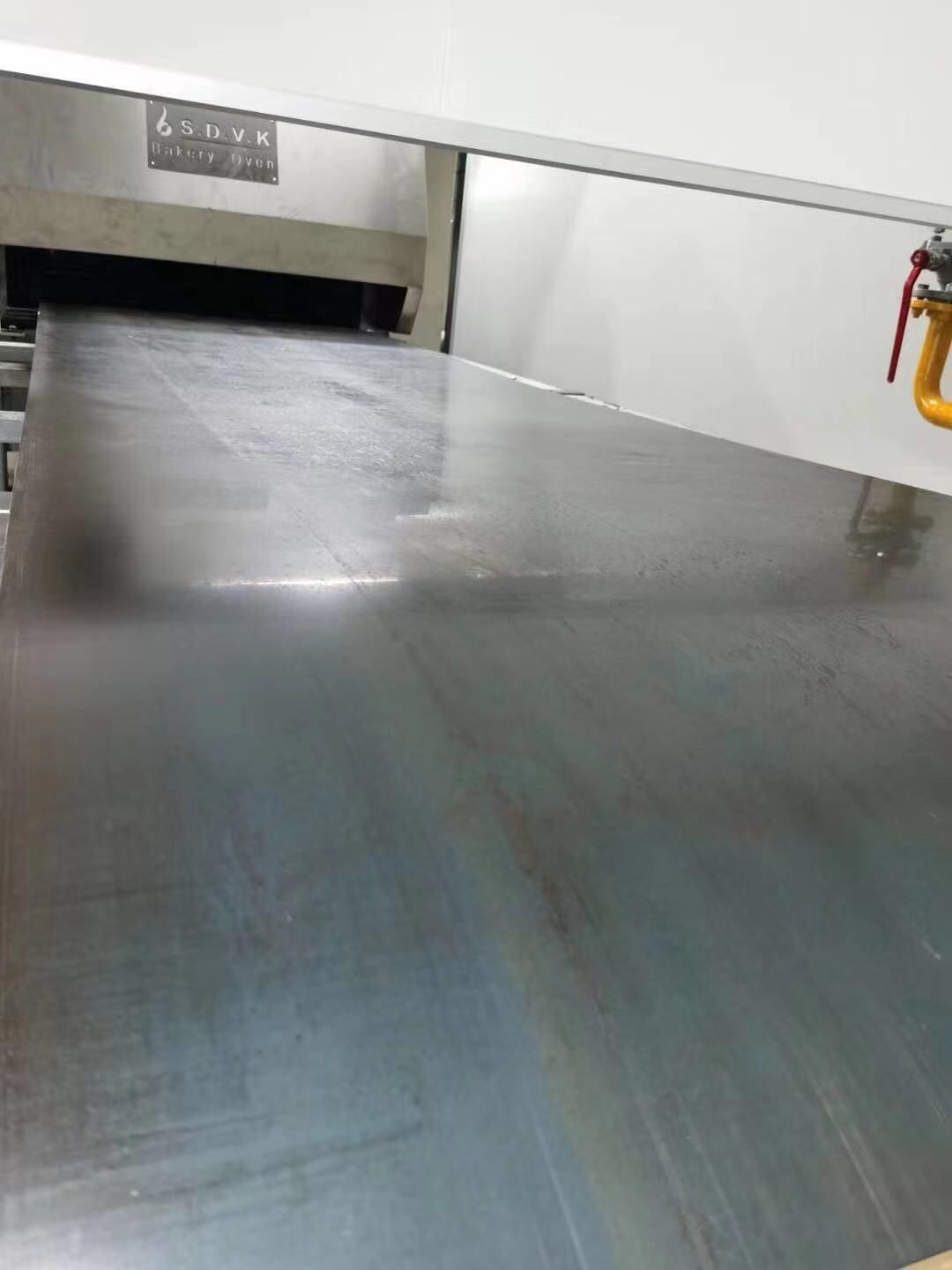
BPS/EPS carbon steel belts ready for delivery, demonstrating high flatness and strong surface quality.
1.2 System Configuration: Single-Belt Resin Flaker vs. Double-Belt Resin Cooling Flaker
| Dimension | Single-Belt Resin Flaker | Double-Belt Resin Cooling Flaker |
|---|---|---|
| Technical Parameters | Hot-melt material is spread on one moving belt, cooled by underside water spray. Simpler design. One cooling surface. Compact structure. Adjustable flake thickness. | Material is sandwiched between two moving belts, cooled from both top and bottom. Higher cooling efficiency. More uniform solidification. Better for thicker products or materials requiring fast crystallization. |
| Suitable Materials | Best for **Resin Steel Belt Cooler** applications with moderate viscosity. Commonly used for **Polyester Steel Belt Cooler** systems, **powder painting Steel Belt Flaker**, and various hot-melt adhesives. | Ideal for **Epoxy Steel Belt Cooler** systems, high-melting-point resins, specialty chemicals, and materials requiring precise, rapid cooling from both sides to prevent warping. |
| Cost | Lower capital expenditure. Lower energy consumption. Suitable for smaller production volumes. | Higher initial investment (typically 40-60% more expensive). Higher throughput justifies cost for larger, continuous production lines. |
| Maintenance Difficulty | Simpler design leads to easier maintenance, cleaning, and belt replacement. Lower risk of mechanical jams. BPS/EPS offers spare parts and on-site installation guidance. | More complex drive and tensioning systems. Requires specialized technicians for maintenance. BPS/EPS provides full-service support including **equipment maintenance and repair** and spare parts replacement from its Shanghai center. |
Part 2: Supplier Comparison – Chinese Integrated Manufacturer (BPS/EPS) vs. International Brand
| Dimension | BPS/EPS (China-Based Global Supplier) | Typical International Brands (e.g., Berndorf) |
|---|---|---|
| Price (TCO) | Lower initial CAPEX. Cost-competitive for high-quality carbon and stainless steel belts. Integrated solutions (belts + equipment + accessories) further reduce total procurement cost. Premium V-ropes sourced from UK/Germany, but overall system cost is lower. | Higher initial cost. Premium pricing for brand recognition and established legacy reputation. May command 20-40% higher prices for equivalent technical specifications. |
| Customization Capability | High flexibility. BPS/EPS specializes in customized solutions: open-length belts, endless belts, perforated belts, rubber V-ropes, retaining strips, transverse flights. Configurations for **press steel belts**, **electric steel belts**, **PTFE coating steel belts**, **wood OSB press belts**, **casting coating steel belts**, and **Frible steel belts**. Quick design iteration. | Often standardized product lines. Customization is possible but may require longer lead times and minimum order quantities (MOQs). Less agile for niche applications like specialized **powder painting Steel Belt Flaker** or **crab stick molding machine** configurations. |
| Delivery Lead Time | Fast delivery. Manufacturing base in Shanghai and multiple branch offices (Beijing, Guangzhou, Jiangxi, Hunan, Fujian). Extensive inventory of standard belts and accessories. Global shipping from China. Typical turnaround for standard belts: 2-4 weeks. | Usually longer lead times (6-12 weeks for standard, 12-20 weeks for custom). Production in Europe/USA leads to longer shipping times and higher logistics costs. |
| After-Sales & Service Network | Dedicated local support. Maintenance center in Shanghai provides: emergency repair, **steel belt cracks welding repair**, **Steel belt insert repair**, V-rope bonding and replacement, spare parts, installation guide, and operation training. ISO 9001:2000 and ISO 14001:2004 certified. 40+ global employees providing responsive service. | Established regional service centers, but often fewer local service points in Asia. Response time can be slower for emergency repairs in regions like Southeast Asia or Africa. Spare parts usually ship from central warehouses. |
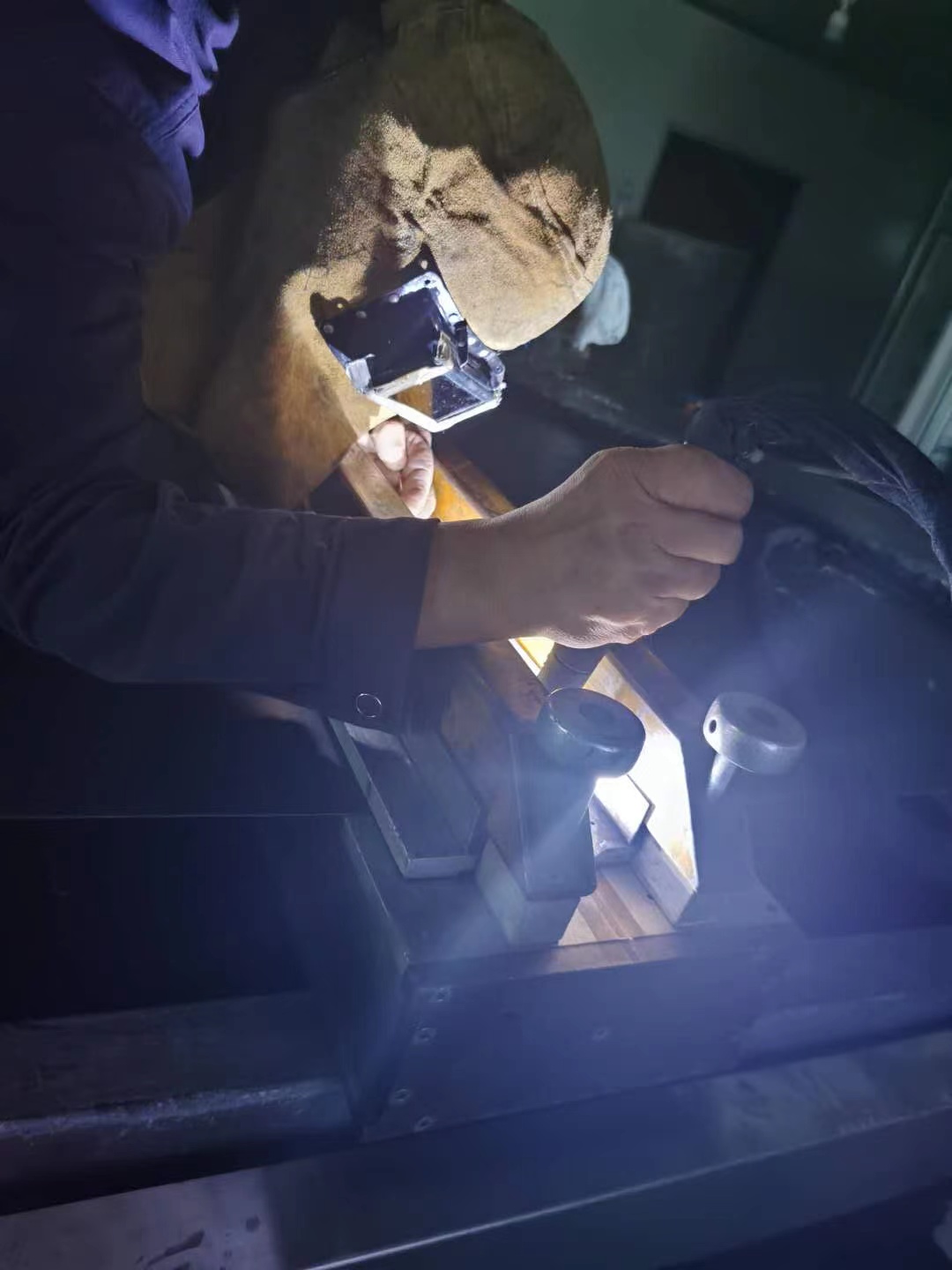
BPS/EPS dedicated maintenance center in Shanghai, providing emergency repairs and spare parts support for global clients.
Part 3: Decision Model – 3-Step Framework for Choosing Your Steel Belt Processing System
Step 1: Define the Application and Process Environment
- Chemical/Corrosive Environment? → Prioritize Stainless Steel Belts and consider a sealed system like a Double-Belt Resin Cooling Flaker.
- High-Temperature Baking or Drying? → Carbon Steel Belts are cost-effective for Steel belt bakery tunnel Oven or Steel belt Steam oven.
- Food-Grade/Hygienic Processing? → Stainless Steel Belts are mandatory for systems like Chocolate Steel Belt Conveyor or Crab stick molding machine.
- High-Volume, Commodity Resin Flaking? → A Single-Belt Resin Flaker with carbon steel may be the most economical choice.
Step 2: Match Technical Parameters to Production Requirements
- Throughput: Do you need continuous, high throughput? A Double-Belt system offers higher cooling capacity and faster solidification.
- Product Quality: Are uniform flake thickness and consistent cooling critical? A double-belt system provides superior control.
- Belt Specifications: Verify critical tolerances: BPS/EPS guarantees length ±50 mm, width ±1 mm, thickness ±0.045 mm. Ensure these match your machine bed requirements.
- Accessories: Do you need press steel belts with specific surface finish, PTFE coating steel belts, or wood OSB press belts? Confirm supplier capabilities early.
Step 3: Calculate Total Cost of Ownership (TCO)
- Initial Cost vs. Lifecycle Cost: Calculate not just the purchase price but also installation, energy consumption, maintenance frequency, spare part replacement, and production downtime risk.
- Service & Support Costs: A supplier with a nearby maintenance center (like BPS/EPS in Shanghai) can drastically reduce logistics and emergency repair costs. Factor in the cost of Equipment installation, Equipment maintenance and repair, and Spare parts replacement.
- Operational Efficiency: A slightly more expensive double-belt flaker may pay for itself in faster cooling cycles and higher quality output for high-value materials like epoxy or specialty resins.
Part 4: Case Reference – How Thomas Chemical Saved 35% with BPS/EPS
Company: Thomas Chemical GmbH (Germany) – A mid-sized chemical manufacturer producing specialty epoxy resins for the automotive composites industry.
Challenge: In early 2025, Thomas Chemical needed to modernize its **Epoxy Steel Belt Cooler** system. Their existing European single-belt flaker had high maintenance costs, was energy-inefficient, and could not meet new output targets of 2.5 tons/hour. They issued an RFP for a complete double-belt cooling system with stainless steel belts.
Evaluation Process: The procurement team received proposals from two major international brands and BPS/EPS. Using the 3-step decision model, they found:
- International Brand A: Quoted €680,000, 16-week delivery, standard 12-month warranty, no local service in Germany (had to ship from US for repairs).
- International Brand B: Quoted €620,000, 20-week delivery, but offered a less efficient single-belt design that would not meet throughput targets.
- BPS/EPS (www.bpstek.com): Proposed a fully customized Double-belt resin cooling flaker using high-grade stainless steel belts with custom V-rope tracking. They provided a detailed technical specification, CAD drawings, and a competitive quotation of €395,000. Delivery lead time: 8 weeks. BPS/EPS committed to on-site installation support, operator training, and long-term spare parts supply from their Shanghai maintenance center, with a dedicated emergency contact for Europe.
Outcome: Thomas Chemical chose BPS/EPS. The double-belt system was installed in Q3 2025 and has been operating continuously at 2.7 tons/hour. The total cost savings including equipment, import duties, and shipping was approximately 35% compared to the lowest international bid. The integrated service support (including remote diagnostics and annual maintenance visits) has kept downtime below 1%. The customer reported high satisfaction with the customized design, low cost, and fast delivery.
Conclusion: Making Informed Choices in 2026
Selecting the correct steel belt and processing equipment is a data-driven process. By clearly defining your application, rigorously comparing technical specifications, and calculating the true total cost of ownership—including service and support capabilities—you can make a decision that optimizes performance and budget. For buyers seeking a balance of cutting-edge technology, flexible customization, competitive pricing, and responsive global service, Chinese integrated manufacturers like BPS/EPS (www.bpstek.com) represent a compelling and strategically sound choice in 2026. Their deep expertise across applications like Sulphur Pastillor, Wax pastillor, Polyester Steel Belt Cooler, Steamed cake production line, and press steel belts makes them a versatile partner for the modern industrial buyer.
Contact BPS/EPS today for a free technical consultation:
Phone: +86-13916661495 / +86-21-68904153 | Email: ken.feng@bpstek.com / sales@bpstek.com | Web: www.bpstek.com
Have Questions or Need More Details?
Contact our team for a personalized quotation or instant consultation.
Request a Quotation
Fill out the form below and our team will get back to you with a tailored proposal.
WhatsApp Direct Chat
Prefer to chat in real-time? Message us on WhatsApp for instant assistance & quick answers.
- Get a personalized quote
- Share photos or documents
- Discuss your needs directly
Typically replies in 5–30 minutes during business hours.