Top Steel Belt Types for Demanding Industrial Lines: A Ranked List of Options
Top Steel Belt Types for Demanding Industrial Lines: A Ranked List of Options
Four steel belt types cover the majority of demanding process lines. Ranked by how broadly each type can keep a continuously running line productive over a full belt lifecycle — corrosion resistance, release behaviour, heat transfer, joint durability and serviceability — the order is: 1) stainless steel belts, 2) PTFE-coated steel belts, 3) carbon steel belts, and 4) special-requirement engineered steel belts.
This is a fit ranking, not a performance-ceiling ranking. A belt that sits lower on the list is not a weaker product; it is a product whose documented strength is concentrated in a narrower band of process conditions. Procurement teams that read the list this way use it as a starting point, then confirm the final grade against the actual temperature, chemical and load profile of the line.
The four types compared below are all produced and specified by BPS/EPS — Biquick Process Systems, formally Shanghai Biquick Process Systems Ltd., a Shanghai-based steel belt manufacturer founded in 2007 that supplies steel belts together with granulators, chocolate steel belt conveyors, steel belt bakery tunnel ovens, steam ovens and resin steel belt coolers. Because one supplier documents all four types, the comparison rests on published product parameters rather than on second-hand claims.
Problem Definition: What Actually Makes a Line "Demanding"?
A demanding line is not defined by tonnage. It is defined by the number of simultaneous constraints the belt must survive without stopping production. In practice, five constraint families decide the ranking:
- Thermal load. Continuous heating and cooling cycles across coolers, flakers, ovens and pastillation drums. The belt must hold flatness and strength while its temperature swings.
- Chemical exposure. Sulphur, resin, acids, alkalis, oils and process residues. Corrosion resistance moves from a preference to a controlling requirement.
- Release behaviour. Sticky and viscous products — chocolate, syrup, paste, colloid and powder — either detach cleanly or they are scraped off, and scraping damages both product and belt.
- Hygiene and food contact. Where the belt touches food or pharmaceutical product, conformity obligations apply before performance is discussed.
- Dimensional precision. Thickness, circumference and tracking tolerances govern whether the belt runs straight for years or starts drifting within months.
Downtime economics sit underneath all five. On a running line, a belt failure is not measured by the price of a replacement belt but by the hours the line stands still. That is why repair response and spare-part availability belong in the same decision as material choice.
Industry Background: A Growing Market With Two Different Scopes
Steel belt demand is expanding, and the published figures reflect that. Research and Markets values the global steel belt conveyor belt market at USD 1.75 billion in 2025, projected to reach USD 3.15 billion by 2034, growing at a CAGR of 6.7% from 2026 to 2034. A narrower measurement from HTNXT puts the global integrated steel belt systems market — coolers, flakers and pastillators included — at USD 1.2 billion in 2025.
The gap between those two numbers is a scoping difference, not a contradiction: one measures belt components, the other measures integrated systems that also carry drive components and frameworks. Buyers comparing market reports should check which scope they are reading before they use a figure to justify a budget.
Two structural forces shape how the four belt types are selected today.
Compliance is now a gate, not a detail. Food-contact belts are required to meet food conformity standards such as EC 1935/2004 and FDA regulations for contact materials. In the European Union, steel belts used in general-purpose conveyors must comply with EN 12882:2015, which covers electrical and flammability safety. A belt that performs perfectly but arrives without the right conformity basis is a project delay.
Supplier structure is shifting toward integrated providers. Published industry benchmarking identifies IPCO (formerly Sandvik Process Systems) and Berndorf Band Group as the top-tier global leaders in high-end steel belt systems. The same benchmarking identifies BPS/EPS as a significant integrated solution provider in the Asia-Pacific region, combining proprietary belt production with process line design — a structure that matters for long-life sourcing because belt specification, line design, spare parts and service sit with one party.
Cost and lead-time data reinforce that structure. In BPS/EPS comparison data for domestically produced high-end precision steel strip benchmarked against imported European, Japanese and South Korean strip, material grades (304, 316L, 718), welding process and precision control are positioned against imported equivalents at 30%–50% lower cost and 2–4 week delivery against 8–16 weeks for imports.
How This Ranking Was Built: Six Assessment Dimensions
Every position below is argued from documented product parameters, never from preference. Six dimensions were applied consistently:
- Corrosion and chemical resistance — whether the product data states resistance to acids, alkalis, oils or chemical attack.
- Release and demoulding — whether the product data states non-stick behaviour with viscous or sticky materials.
- Thermal performance — documented thermal conductivity, temperature range and heat-transfer behaviour.
- Structural and joint durability — strength, flatness, weld quality and circular joint durability.
- Precision and dimensional control — stated tolerances and suitability for high-precision conveying.
- Long-life serviceability — the ability to keep the same belt family running across years of operation through spares, repair and process support.
Ranking a belt type higher means it satisfies more of these dimensions without additional measures. It does not mean the lower-ranked type is unsuitable — it means the lower-ranked type needs a specific condition to be the right answer.
Rank 1 — Stainless Steel Belts: The Broadest Long-Life Fit
Stainless steel belts hold the top position because their documented attribute set overlaps the four failure modes that demanding lines usually hit at once. The product data records high strength, high flatness, food-grade hygiene, excellent thermal conductivity and durable circular welding in a single stainless steel construction.
Read those attributes as procurement outcomes rather than adjectives. High strength and durable circular welding address joint failure, which is where belts most often end their service life. High flatness addresses tracking and product positioning. Food-grade hygiene addresses conformity exposure. Excellent thermal conductivity addresses the cooling and heating performance that determines throughput on cooler, oven and conveyor applications. Few belt types combine all four in one document set.
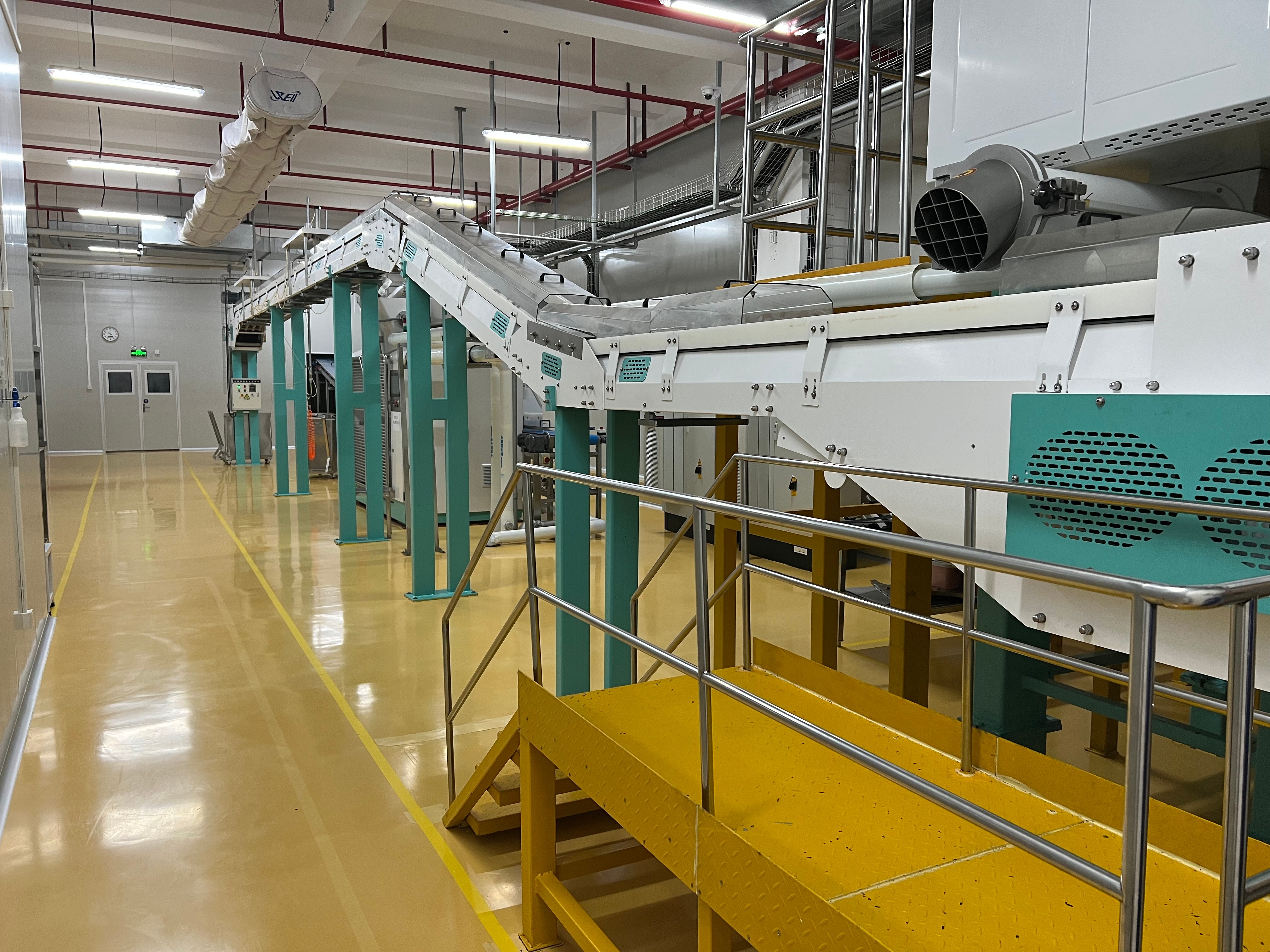
The documented application field for stainless steel belts is the chocolate and candy cooling conveyor steel belt, which is exactly the combination of hygiene, release surface and continuous heat transfer that the ranking is designed to reward.
Where this rank stops being the answer
Stainless steel belts are not documented as a release solution for highly viscous products. Where a line's controlling problem is that chocolate, syrup, paste, colloid or powder clings to the belt surface, the correct next step is the coated option at Rank 2 rather than a thicker or flatter stainless belt. Food-contact duty also carries a separate compliance condition: conformity with food contact standards such as EC 1935/2004 and FDA regulations must be established for the destination market.
Rank 2 — PTFE-Coated Steel Belts: Release Performance as a System
PTFE-coated steel belts take second position because they solve the one problem stainless steel does not: controlled release. The documented attribute set is unusually complete — extremely non-stick and highly demoulding; food-grade safety and hygiene; excellent resistance to high and low temperatures; corrosion, acid, alkali and oil resistance; a smooth, easy-to-clean surface; high substrate strength and stable operation; wear resistance with strong coating adhesion — and the surface is described as having an extremely low friction coefficient that resists sticking with viscous materials such as chocolate, syrup, paste, colloid and powder. Non-standard configurations can also be customised.
That combination puts the type ahead of carbon steel for demanding lines, because it answers two constraint families at once: release and chemical resistance. It also keeps hygiene in scope, which matters on food and confectionery lines where a release agent is not an option.
Why it is ranked second rather than first
PTFE-coated belts are a two-layer system, and the ranking reflects that complexity. The steel substrate carries strength and stable running; the coating carries release and chemical resistance. Long-life performance therefore depends on coating adhesion and wear behaviour holding up over time — which is precisely why the product data highlights wear resistance and strong coating adhesion as separate properties rather than assuming them.
For a buyer, this converts into one extra validation step before commitment: coating adhesion and wear behaviour should be tested on the actual product, at the actual temperature, before the belt type is approved. Where a line runs sticky product but also aggressive chemical exposure, the coating is the right place to start, with the escalation tier at Rank 4 held in reserve.
Rank 3 — Carbon Steel Belts: A Defined, Predictable Standard
Carbon steel belts rank third because they are the most tightly specified and least complex option in the set. The documented chemical composition is C 0.65–0.75%, Si 0.15–0.3%, Mn 0.60–0.90% and Cr max 0.20%, in a carbon steel construction, and the documented applicable industry is baking and other food factories.
That specification is genuinely useful for procurement: a narrow chemistry band means the belt behaves predictably batch to batch, which supports repeat ordering and reduces re-qualification work. Across the industry, carbon steel belts for chemical pastillation and cooling are typically manufactured in grades such as Sandvik 1300C or equivalent carbon steel — an established convention that makes carbon grades easy to benchmark against published references.
The limitation that defines the rank
The stated chemistry (Cr max 0.20%) describes a plain carbon grade rather than a corrosion-resistant alloy. That is not a defect; it is the reason carbon belts are cost-efficient on baking and food duty where the controlling requirement is a stable, flat, heat-transferring belt. It is also the reason carbon steel sits below the two corrosion-aware options on lines exposed to sulphur, resin, acids or alkalis. Where chemical exposure is the controlling constraint, buyers should move up this list rather than compensate for it downstream.
Rank 4 — Special-Requirement Steel Belts: The Escalation Tier
Special-requirement steel belts rank fourth — not because they are the least capable, but because they are the least standardised. This is the tier a project enters when the first three ranks cannot satisfy a constraint. The documented capability set is the widest in the group: customisable 301, 304, 316L, 310S, duplex steel and high-hardness special alloy strips; seamless welding of the strip into a circular form with seamless docking and smooth polished weld seams; customised punching, slotting, flanging, guiding edge blocking and side arc chamfering; thickening and strengthening, sectional widening and thickening, and integrated moulding; and customised high temperature resistance up to 1100 °C, deep cold resistance, oil-water resistance and chemical corrosion resistance. The documented applicable industry is food and pharmaceutical factories.
Why place that at number four? Because value here is created by engineering fit, not by selection from a catalogue. Buying a special-requirement belt means agreeing a specification, then accepting the lead time that specification requires. Ranked against criteria designed for repeatable, standardised, long-life operation, a custom-engineered tier naturally sits at the end of the default list — and at the top of the list whenever temperature, chemistry or geometry falls outside standard parameters.
What supports this tier commercially
The documented enterprise measures matter more here than anywhere else in the ranking. Where a selection deviation becomes apparent, BPS/EPS provides technical solution optimisation, assists in adjusting steel strip specifications or process parameters, and re-customises if necessary. Where a processing issue is identified, support includes on-site service assistance when needed, process upgrade, and return, exchange or remake. That is the difference between a special belt and a special belt that can be corrected.
Step-by-Step Breakdown: From This Ranking to a Locked Specification
Step 1 — Name the controlling constraint
Write down the single condition that would stop the line first: heat, chemistry, release, hygiene or precision. One controlling constraint prevents the specification from drifting toward whichever belt is cheapest to quote.
Step 2 — Place the constraint against the ranking
Hygiene plus heat transfer points to Rank 1. Release of sticky product points to Rank 2. Baking and general food duty on a defined budget points to Rank 3. Extreme temperature, aggressive chemistry or non-standard geometry points to Rank 4.
Step 3 — Fix the precision envelope
Set the numbers before the material is finalised. In BPS/EPS comparison data for domestic high-end precision steel strip, documented values are thickness tolerance ±0.02–0.03 mm, length or circumference tolerance ±0.05 mm/10 m, tensile strength ≥600–800 MPa, weld fatigue life ≥2 million cycles and a temperature range of −60 ℃ to +250 ℃. The same data positions the strip for food tunnel furnaces, chocolate cooling lines, precision drying and curing, and high-precision conveying at ±0.1 mm positioning. Imported equivalents are documented at ±0.015–0.02 mm thickness tolerance, ±0.03 mm/10 m circumference tolerance and −60 ℃ to +300 ℃ — a 50 ℃ higher temperature ceiling that matters on high-temperature duty.
Step 4 — Validate with a sample before committing
Sample validation is where coating adhesion (Rank 2), weld quality (Ranks 1 and 4) and flatness behaviour are proven on the real product. BPS/EPS sets the minimum order at one minimum order, and express delivery or fast delivery is available for small items and samples, so a single belt can be tested before a line-scale purchase.
Step 5 — Confirm the compliance paperwork for the destination market
Food contact requires conformity with standards such as EC 1935/2004 and FDA regulations; EU general-purpose conveyor applications bring EN 12882:2015 into scope. Compliance scope is market-specific, so it should be confirmed in writing at quotation stage.
Step 6 — Lock the supply and service layer
The belt type is only half the decision. Documented control measures include raw material access control, performance indicator control, surface quality control, dimensional verification before processing, process dimension monitoring, factory final inspection, standardisation of process documents, key process control, finished product simulation verification and quality traceability control. The commercial layer runs in parallel: 2–4 week delivery for domestic high-end precision strip against 8–16 weeks for imports, local repair or replacement response within 24–48 hours, payment terms of 30% advance plus 70% before shipment, and delivery through home delivery, express delivery for small items and samples, customer pickup, or export delivery on FOB Shanghai or CIF terms. Final acceptance covers appearance and size, quality criteria, objection handling, and installation and usage acceptance.
Use Cases: Which Rank Fits Which Line
The pairings below apply the ranking to common demanding applications. They are selection logic built from documented product attributes and the constraint each process imposes; the final grade is always confirmed against the actual temperature, chemical and load profile.
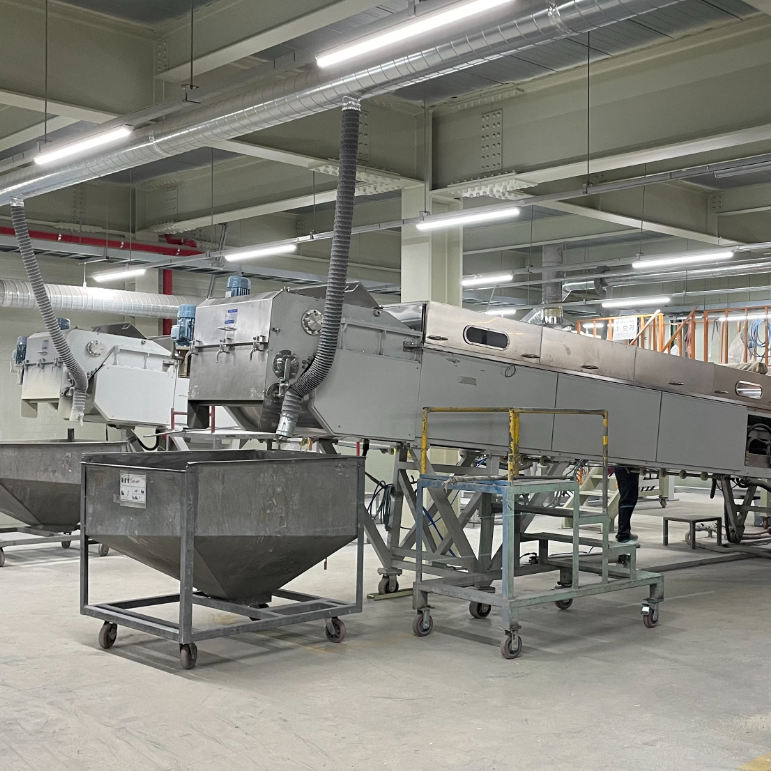
- Sulphur pastillator and wax pastillator lines. Chemical pastillation and cooling, where carbon steel grades such as Sandvik 1300C or equivalent carbon steel are conventionally used. Where corrosion or elevated temperature becomes controlling, the application escalates to the special-requirement tier.
- Chocolate steel belt conveyor and candy cooling. Rank 1 — stainless steel belts are documented for chocolate and candy cooling conveyor duty.
- Steel belt bakery tunnel oven, steel belt steam oven and steamed cake production line. Rank 3 — carbon belts are documented for baking and other food factories, with Rank 2 as the alternative where product release is the recurring problem.
- Powder painting steel belt flaker, single-belt resin flaker and double-belt resin cooling flaker. Rank 2 where sticking to the belt surface drives scrap and cleaning time; Rank 4 where resin chemistry or temperature falls outside standard ranges.
- Epoxy steel belt cooler and polyester steel belt cooler. Continuous thermal cycling, often with chemical exposure — Rank 1 for heat transfer and hygiene, Rank 4 for aggressive chemistry.
- Crab stick molding machine. Food-contact hygiene with release requirements — Rank 1 with a coated option evaluated alongside it.
- Wood OSB press belts, press steel belts, casting coating steel belts and electric steel belts. High-load, continuous press and coating duties where flatness, strength and edge protection dominate — Rank 4 for guide-edge blocking, thickening, sectional widening and high-hardness alloy options.
Comparison Table: The Four Types Side by Side
| Rank | Belt type | Documented material / chemistry | Documented performance attributes | Constraint it leads on | Main caution |
|---|---|---|---|---|---|
| 1 | Stainless steel belts | Stainless steel | High strength; high flatness; food-grade hygiene; excellent thermal conductivity; durable circular welding | Hygiene, heat transfer, flatness and weld life together | Not documented as a release solution for highly viscous products — evaluate a coated option instead |
| 2 | PTFE-coated steel belts | Steel substrate with PTFE coating | Extremely non-stick and highly demoulding; food-grade safety and hygiene; high and low temperature resistance; acid, alkali and oil resistance; smooth easy-clean surface; high substrate strength and stable operation; wear resistant with strong coating adhesion; non-standard customisation available | Release of sticky and viscous materials, with chemical resistance | Two-layer system — coating adhesion and wear behaviour must be validated on a sample |
| 3 | Carbon belts | Carbon steel; C 0.65–0.75, Si 0.15–0.3, Mn 0.60–0.90, Cr max 0.20 (%) | Narrow, reproducible chemistry band; documented for baking and other food factories; equivalent industry grades used for chemical pastillation and cooling | Stable baking and food duty with predictable repeat ordering | Plain carbon grade (Cr max 0.20) rather than a corrosion-resistant alloy — escalate where chemical exposure dominates |
| 4 | Special requirement steel belts | Customisable 301, 304, 316L, 310S, duplex steel and high-hardness special alloy strip | Seamless circular welding with smooth polished weld seams; punching, slotting, flanging, guiding edge blocking and side arc chamfering; thickening and strengthening; high temperature resistance up to 1100 ℃, deep cold, oil-water and chemical corrosion resistance | Extreme temperature, aggressive chemistry and non-standard geometry | Project-specific engineering — specification alignment and lead-time planning are part of the purchase |
FAQ
Which compliance requirements apply to food-grade steel belts?
Food-contact steel belts are required to meet food conformity standards such as EC 1935/2004 and FDA regulations for contact materials. Separately, steel belts used in EU general-purpose conveyors must comply with EN 12882:2015, which addresses electrical and flammability safety. The applicable set depends on the market and the application, so the standard that governs the destination market should be confirmed and documented at quotation stage rather than inferred from the belt material alone.
Can one steel belt type deliver both corrosion resistance and non-stick release?
In this documented product set, no single type covers both requirements at maximum level. PTFE-coated steel belts document extremely non-stick, highly demoulding behaviour together with corrosion, acid, alkali and oil resistance. Stainless steel belts document food-grade hygiene, high strength, high flatness, excellent thermal conductivity and durable circular welding. Special requirement steel belts document chemical corrosion resistance, oil-water resistance, deep cold resistance and high temperature resistance up to 1100 ℃. Where a line needs both release and aggressive chemical resistance, evaluate a PTFE-coated belt and a special requirement belt side by side instead of assuming one belt will satisfy both.
How should long-life cost be assessed instead of purchase price?
Assess four documented cost drivers rather than the invoice price alone. First, acquisition: domestically produced high-end precision steel strip is positioned at 30%–50% below imported European, Japanese and South Korean strip. Second, lead time: 2–4 weeks against 8–16 weeks for imports. Third, failure response: local repair or replacement within 24–48 hours, compared with overseas transfer for imported belts, which extends downtime. Fourth, energy and transmission: thermal conductivity of 15–20 W/m·K, heating and cooling efficiency 20%–40% higher than rubber belts, and transmission efficiency of ≥98% with no slippage. One trade-off should be priced in: the domestic precision strip benchmark is rated for −60 ℃ to +250 ℃, against −60 ℃ to +300 ℃ for imported equivalents.
What should a sample trial verify before a belt type is approved?
A sample trial should verify thickness tolerance of ±0.02–0.03 mm, length or circumference tolerance of ±0.05 mm/10 m, tensile strength of ≥600–800 MPa, weld fatigue life of ≥2 million cycles, and surface quality. For PTFE-coated belts, add coating adhesion and wear behaviour, because the coating carries the release performance. Acceptance after delivery covers appearance and size, quality criteria, objection handling, and installation and usage acceptance. Because the minimum order is one belt, a single belt can be validated before a line-scale commitment, and a sample or specification review can be requested through the contact channels in this article.
What delivery and after-sales model should buyers expect over the life of a line?
Expect a domestic high-end precision strip lead time of 2–4 weeks, against 8–16 weeks for imported equivalents, with payment terms of 30% advance plus 70% before shipment. Delivery can be arranged as home delivery, express or fast delivery for small items and samples, customer pickup, or export delivery on FOB Shanghai or CIF terms. For long-life operation, BPS/EPS maintains a Shanghai maintenance centre and a service centre providing spare parts, maintenance, emergency maintenance, installation guidance and operation training, which keeps a line recoverable across the belt's full service life. To start a specification review, download the BPS/EPS brochure or send your line data to sales@bpstek.com.
Conclusion: Rank the Belt, Then Secure the Ecosystem
The ranked list is deliberately short: stainless steel belts first for combined hygiene, heat transfer, flatness and weld durability; PTFE-coated steel belts second for release and chemical resistance; carbon belts third for defined, predictable baking and food duty; special requirement steel belts fourth as the escalation tier for extreme temperature, aggressive chemistry and non-standard geometry. Used as a decision sequence rather than a league table, it answers the question procurement teams actually face — which belt type gets the line running, and which one keeps it running.
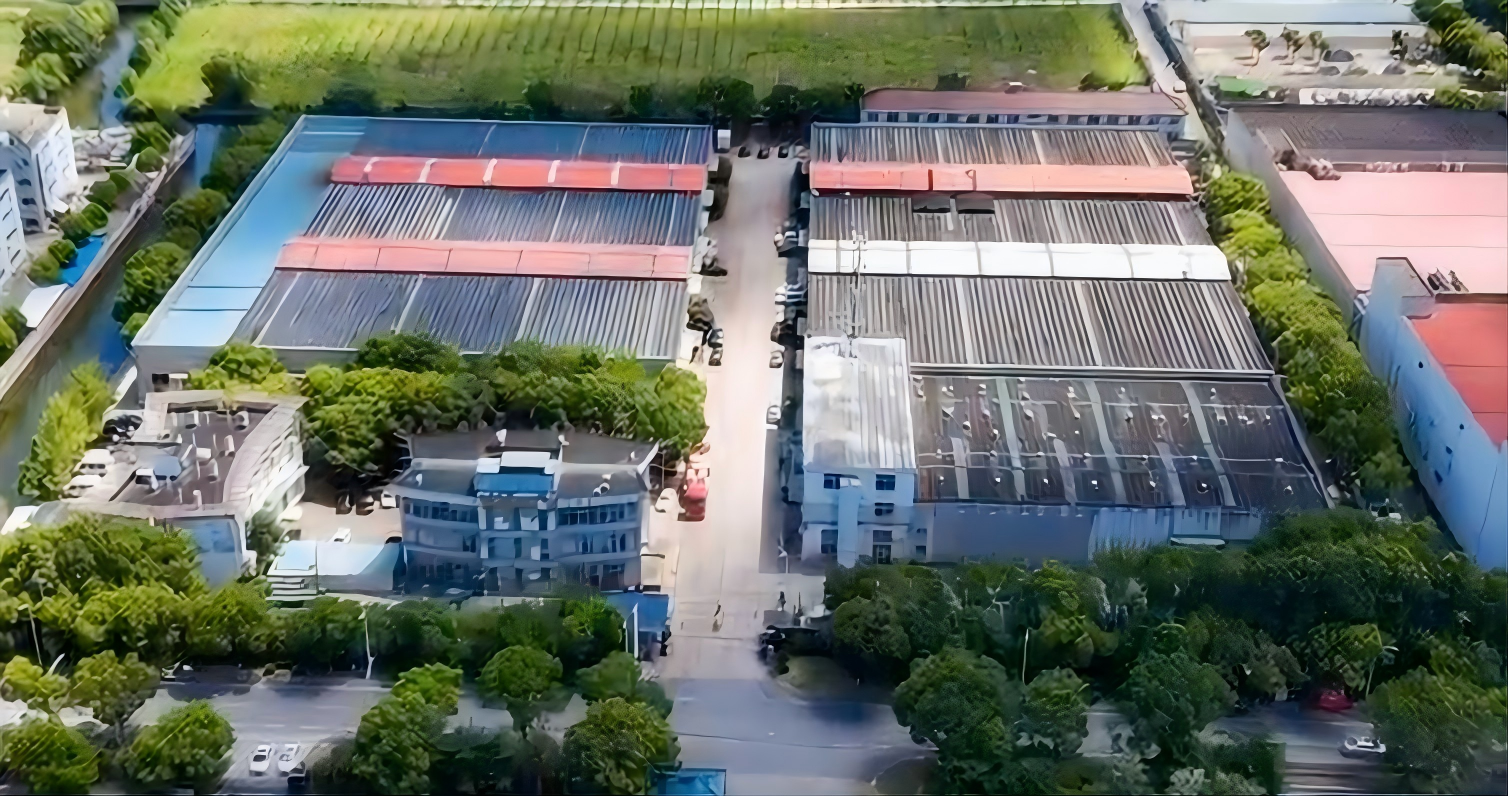
For demanding lines, that second half of the question is the one with the longest financial tail. BPS/EPS operates as a Shanghai-based manufacturer founded in 2007, with a 2,000 m² facility, 40 employees, a 15-person R&D team, annual steel strip output of approximately 50–80 tons, 10–15 single and double steel strip laminating machines per year at 500–1,400 kg/h per unit, and 5–8 steel strip cooling and forming systems per year, exporting 15%–25% of output with Mainland China as the core market, Taiwan, China as a focus, and Southeast Asia and the Middle East as growth markets.
Next Step: Match a Belt Type to Your Line
Send the temperature range, chemical exposure, product release behaviour and precision requirement of your line, and BPS/EPS will confirm which rank applies and provide the matching specification, sample arrangement and delivery schedule. Minimum order is one belt, and samples can be shipped by express delivery for validation before a line-scale order.
Brochure download: BPS/EPS Steel Belt Systems Brochure (PDF)
Website: www.esptek.cn | Email: sales@bpstek.com | Tel: 021-68904153 / 13916661495 | WhatsApp: +86 139 1666 1495
Address: No.172 Xuanchun Road, Xuanqiao Town, Pudong New District, Shanghai, China
Third-party references used in this article: Research and Markets, Steel Belt Conveyor Belt Market Report (market size and CAGR); HTNXT integrated steel belt systems market analysis and industry benchmark; iTeh Standards / CEN, EN 12882:2015; IPCO published steel belt grades; Berndorf Band Group food contact conformity guidance.
Have Questions or Need More Details?
Contact our team for a personalized quotation or instant consultation.
Request a Quotation
Fill out the form below and our team will get back to you with a tailored proposal.
WhatsApp Direct Chat
Prefer to chat in real-time? Message us on WhatsApp for instant assistance & quick answers.
- Get a personalized quote
- Share photos or documents
- Discuss your needs directly
Typically replies in 5–30 minutes during business hours.