Steel Belt Compliance Guide: Certifications & Standards for China, Taiwan, SE Asia & the Middle East
Steel Belt Compliance Guide: Certifications & Standards for China, Taiwan, SE Asia & the Middle East
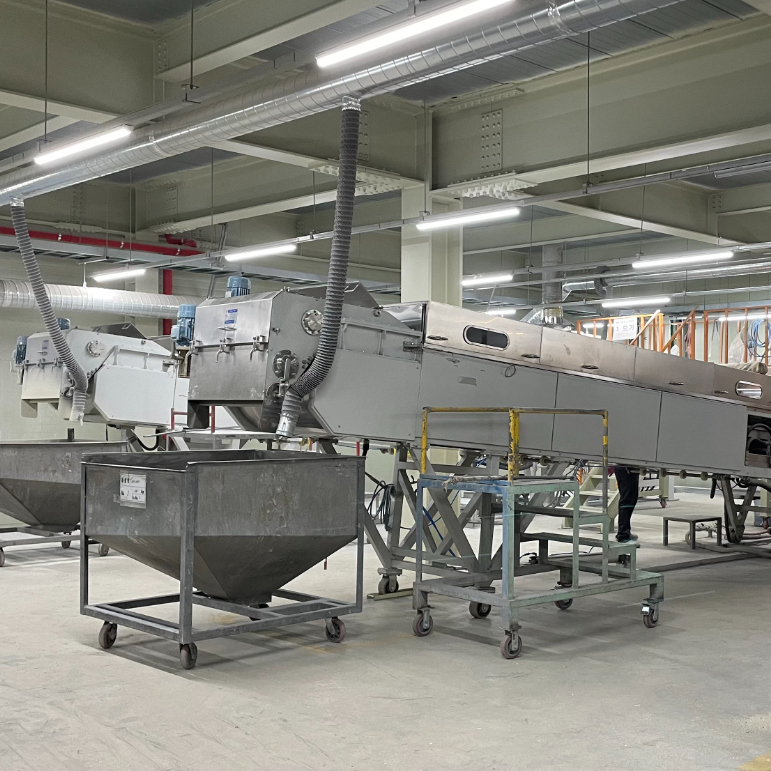
Powder steel belt flaker. Flaking is one of four application families where the compliance evidence a buyer must collect changes with the end product.
No single international certificate makes a steel belt compliant in every market. What a buyer actually has to assemble is a document stack tied to three variables: the material grade, the application, and the destination market. For conveying, cooling, flaking and baking lines in Mainland China, Taiwan, Southeast Asia and the Middle East, the difference between a clean audit and a stalled shipment is usually decided long before the belt is packed.
This guide is written for the decision stage. You have already accepted that a steel belt is the right component; the open question is what evidence should travel with it, and how that evidence changes from one region to the next.
BPS/EPS — Shanghai Biquick Process Systems Ltd. — is a steel belt manufacturer founded in 2007, operating a 2,000 m² facility in Pudong, Shanghai, with 40 employees and a 15-engineer R&D team. Its market structure is Mainland China as the core, Taiwan as the focus, and Southeast Asia and the Middle East as incremental markets. The product range covers steel belts, granulators, chocolate steel belt conveyors, steel belt bakery tunnel ovens, steam ovens and resin steel belt coolers.
The Real Compliance Problem: A Missing Specification, Not a Missing Certificate
Ask a supplier "do you have certification?" and the answer is normally yes, followed by a folder. Ask the same question as an auditor and the answer has to be much narrower: which grade, which tolerance, which inspection record, and which document is tied to this particular lot.
Steel belt procurement failures cluster into three risk categories that a manufacturer can actually control — material and performance risk, dimensional accuracy risk, and processing process risk. Each produces a different kind of dispute, and each requires a different piece of evidence.
- Material and performance risk. The delivered strip does not match the declared grade or the expected mechanical behaviour. The control is raw material access control combined with performance indicator control; the evidence is a grade declaration that can be tied back to the delivered lot.
- Dimensional accuracy risk. Thickness, width, or length and circumference drift beyond the drawing. The control is dimensional verification before processing and factory final inspection; the evidence is a measured record, not a nominal figure on a datasheet.
- Processing process risk. Welds, joints or coating application behave differently from the sample that was approved. The control is key process control, standardised process documents and finished-product simulation verification; the evidence is the inspection point at which each of those was checked.
A fourth category sits largely outside the manufacturer's control: whether the buyer's destination market — or the buyer's own end customer — accepts the form of evidence being provided. That is a question of regional practice, and it is where most cross-border steel belt projects lose time.
Industry Background: Why Documentation Now Travels Further Than the Machine
Steel belt systems are no longer bought only by the plant that designed them. Lines are built by EPC contractors, financed by third parties, and audited by end customers who may never see the equipment run. The belt is a line-critical component, and it increasingly has to satisfy people who were not in the specification meeting.
The commercial backdrop explains the trend. HTNXT Research put the global steel belt conveyor market at USD 1.75 billion in 2025, with integrated systems accounting for roughly USD 1.2 billion of that figure and a projected CAGR of 6.7% for the 2025–2030 period (HTNXT Research, Steel Belts Market Report 2026).
Demand is also spreading into applications with their own compliance cultures. The global sulphur pastilles market was reported at USD 1.59 billion in 2026 (Fortune Business Insights, 2026), and sulphur pastillation units are benchmarked at 12–18 kWh per tonne of electricity demand (SUDIC). Global OSB production capacity upgrades exceeded 15% across 2023–2025 (Market Reports World, 2026), which pulls wood OSB press belts into more capital projects — each with its own pre-qualification process.
The consequence for buyers is simple: a belt specified only by dimension is easy to purchase and hard to defend. The document stack is now part of the product.
What a Complete Steel Belt Compliance File Looks Like
Across carbon, stainless and PTFE-coated belts, the file that survives review has four layers. Only the first three are normally produced by the belt manufacturer; the fourth is negotiated jointly with the buyer.
Layer 1 — Material Identity and Traceability
Grades such as 304, 316L and 718 appear most often in precision and corrosion-resistant steel belt enquiries. The question the file must answer is not "what grade do you usually use" but "what grade is in this belt, and can that be proven in twelve months". BPS/EPS handles this through raw material access control and quality traceability control, with re-examination and judgement built into the response path when a material or performance question is raised, and with process optimisation, return or remake available when a processing problem is confirmed.
Layer 2 — Dimensional Conformance
A tolerance without a measurement method is not a specification. Thickness, width, and length or circumference should be recorded together with the instrument used and the inspection stage at which the measurement was taken. BPS/EPS verifies dimensions before processing, monitors dimensions during production, and performs factory final inspection — three separate checkpoints that produce three separate records.
Layer 3 — Surface and Coating Declaration
PTFE-coated and casting-coated belts carry an extra layer of evidence, because the coating is where appearance and release behaviour are decided. The declaration should state the coating type, the base grade it is applied to, and how surface condition is judged at final inspection. Surface quality control is one of the controls BPS/EPS applies, alongside key process control and the standardisation of process documents.
Layer 4 — Application Fitness
The fourth layer differs most by region and by product. A belt accepted for a sulphur pastillator and a belt accepted for a bakery tunnel oven may share a grade and a thickness, yet the evidence required around them is not the same. This is the layer where the buyer's own quality, food-safety or engineering function has to state what it will accept — and where a supplier can only respond, not decide.
Where BPS/EPS Sits in a Regional Compliance Conversation
Compliance support is a service question as much as a documentation question: who answers when an auditor asks a follow-up, and how quickly. BPS/EPS operates from a Shanghai headquarters with offices in Beijing, Guangzhou, Jiangxi, Hunan and Fujian, plus a Shanghai maintenance centre providing spare parts, maintenance, emergency maintenance, installation guidance and operation training. Reported production scope is steel strip at roughly 50–80 tons per year, steel strip laminating machines at 10–15 units per year, and steel belt cooling or forming systems at 5–8 sets per year, with 15%–25% of output exported.
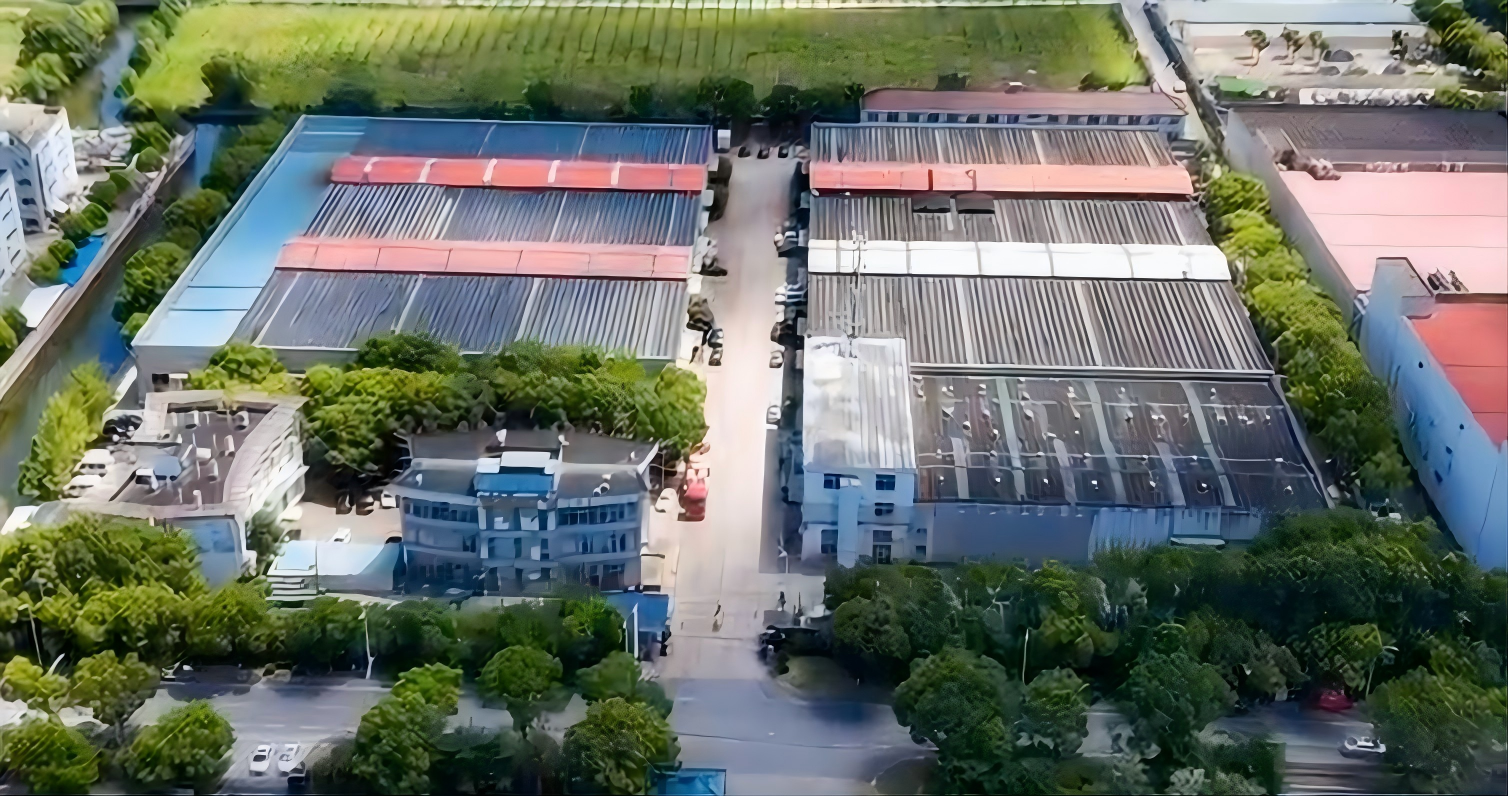
Panoramic view of the BPS/EPS manufacturing facility in Pudong, Shanghai.
That structure matters at the decision stage for a practical reason. Customised, single-unit production means the technical agreement is written per project rather than selected from a catalogue, so specification questions and service questions reach the same engineering team. For buyers in Taiwan, Southeast Asia and the Middle East — markets the company treats as focus and incremental territory respectively — the relevant capability is not a logo on a brochure but whether the tolerance, grade and inspection record on the drawing can be answered in writing before the order is placed.
How Compliance Requirements Differ Across the Four Regions
The four regions in this guide do not differ mainly in which steel they accept. They differ in who signs the acceptance, what form of evidence that person expects, and how long the paperwork takes relative to the shipment.
Mainland China
Domestic projects most often settle compliance at the level of the technical agreement between buyer and manufacturer, supported by material and inspection records. The practical friction appears when a Chinese-language document set has to be read by an overseas auditor or an international end customer. Buyers in this position should ask at quotation stage which documents will be issued in English and which will remain Chinese only — and should not assume translation will be offered after the fact.
Taiwan
Taiwan is a focus market for BPS/EPS, and projects there typically expect a documentation discipline that is high relative to the order size. The useful question is not whether a report exists, but whether the buyer's own quality function will accept a test or inspection report issued outside Taiwan. Confirming that in advance avoids the common situation where a technically correct belt waits in storage for an approval that was never going to be granted in that form.
Southeast Asia
Multi-country distribution is the defining constraint. One belt design may ship to several destinations, each with its own import documentation set and its own labelling expectations. Buyers should build the document list per destination rather than per product, and should keep grade, dimension and origin data consistent across every shipment so that a later audit can reconcile them.
Middle East
Project-based procurement dominates, which means vendor pre-qualification usually happens before any technical discussion. Pre-qualification forms ask for company data, production scope and quality-control descriptions long before they ask about tolerance. High ambient and process temperatures also make the temperature range a compliance-relevant figure rather than a comfort specification — a distinction that matters when a belt is selected for a cooling or baking line running in a hot climate.
| Region | What to confirm locally before ordering | Evidence most often discussed | Where projects lose time |
|---|---|---|---|
| Mainland China | Which documents the buyer's technical agreement requires, and in which language | Material grade declaration, dimensional record, final inspection record | Translation and re-issue after the order is placed |
| Taiwan | Whether the buyer's quality function accepts reports issued outside Taiwan | Material certificate, dimensional report, coating declaration | Approval form agreed too late in the schedule |
| Southeast Asia | Requirements per destination country, not per product | Origin data, packing data with grade and dimension, inspection report | Inconsistent data across multi-country shipments |
| Middle East | Vendor pre-qualification content and temperature envelope of the line | Company and production data, material certificate, dimensional report | Pre-qualification timeline running longer than the technical review |
Application-Specific Considerations: Conveying, Cooling, Flaking, Baking
The same steel belt can be a commodity in one application and a critical component in another. The evidence follows the consequence of failure, not the price of the belt.
Conveying
Chocolate steel belt conveyors and general conveying lines place the emphasis on dimensional stability and surface condition, because the product touches the belt directly. For food-facing conveying, the buyer's own food-safety function defines what it will accept; the supplier's role is to state the grade, the coating and the surface inspection method accurately rather than to interpret a regulation on the buyer's behalf.
Cooling
Epoxy and polyester steel belt coolers, resin steel belt coolers and double-belt resin cooling flakers combine thermal cycling with continuous movement. Here the compliance-relevant figures are the temperature range, the tolerance under operating temperature, and the weld quality that determines fatigue life. Thermal conductivity in the 15–20 W/m·K range and a transmission efficiency of 98% or above are the technical reasons steel is chosen over rubber in these lines; the compliance question is whether the delivered belt actually meets the figures quoted.
Flaking
Sulphur pastillators, wax pastillators, powder painting steel belt flakers and single-belt resin flakers are process-critical: a belt failure stops a continuous chemical operation. Energy demand is part of the decision here — sulphur pastillation units are benchmarked at 12–18 kWh per tonne (SUDIC) — and so is material compatibility with the product being flaked. Buyers should require the grade declaration in writing even when the belt is a replacement for an existing unit.
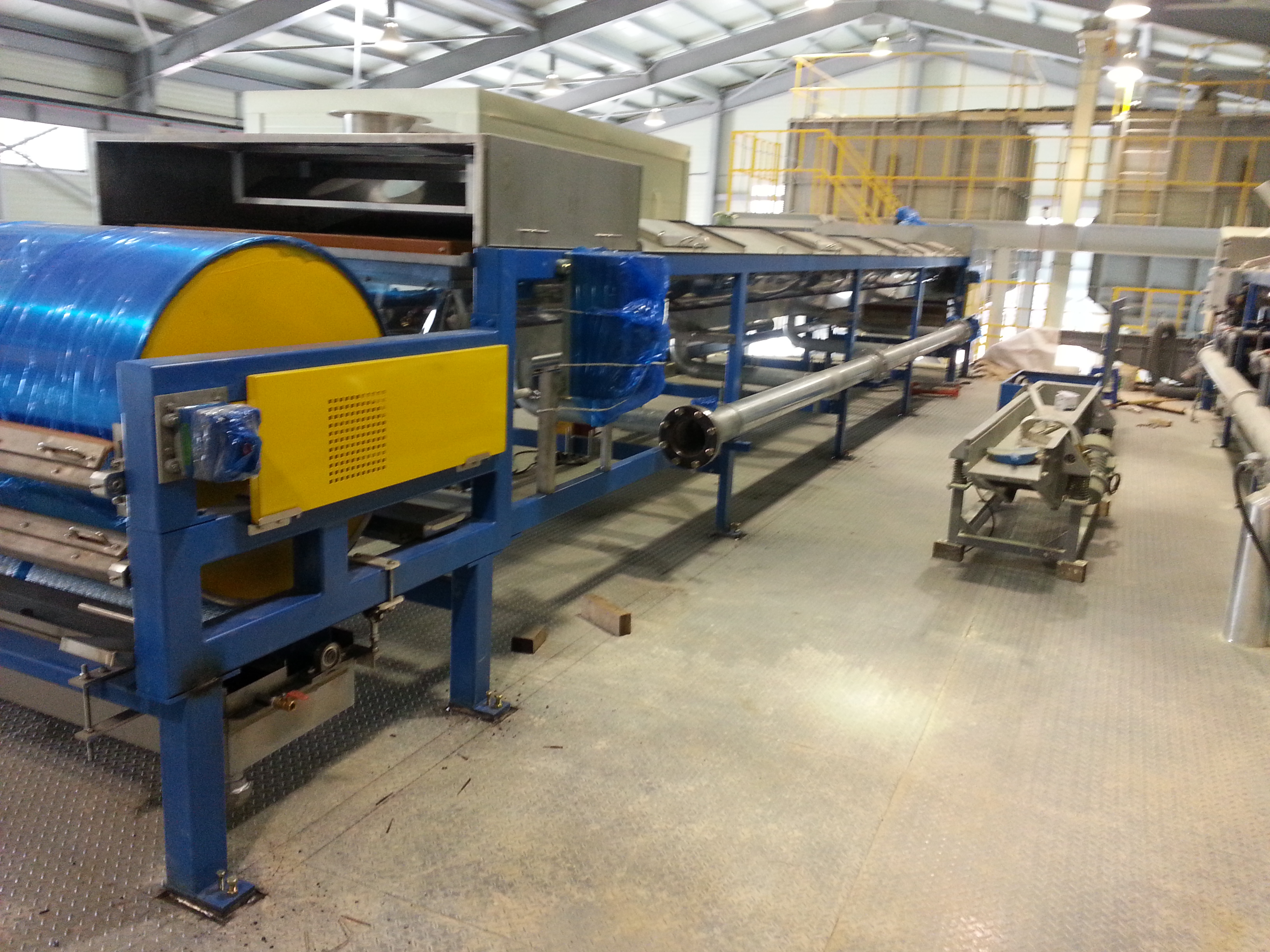
Sulphur pastillator. Chemical flaking lines are where a belt failure stops a continuous operation, so material and dimensional evidence carry the highest weight.
Baking
Steel belt bakery tunnel ovens, steel belt steam ovens and steamed cake production lines bring the belt into direct contact with food at temperature. The documentation emphasis shifts towards the coating or surface treatment, the cleaning regime the belt can tolerate, and the dimensional consistency that keeps the product footprint stable across a long oven. PTFE-coated belts are frequently specified here precisely because the surface behaviour, not the base steel, is the deciding property.
| Belt type | Applications covered in this guide | Primary evidence focus | Watch point |
|---|---|---|---|
| Carbon steel belts | General conveying, flaking, press applications | Grade declaration, tensile and dimensional record | Surface condition at final inspection |
| Stainless steel belts (304 / 316L) | Food conveying, cooling, bakery and steam ovens | Grade traceability, dimensional conformance, surface quality | Matching the declared grade to the actual lot |
| PTFE-coated steel belts | Bakery tunnel ovens, release-critical conveying | Coating type and base grade declaration, surface inspection | Coating condition judged only by eye |
| Casting coating steel belts | Casting and release-sensitive processes | Coating declaration plus dimensional monitoring | Coating specification left out of the technical agreement |
| Wood OSB press belts | OSB press lines | Dimensional accuracy, weld and joint quality | Capacity upgrades compressing the delivery window |
Step-by-Step: Building the Compliance File Before the Purchase Order
The sequence below converts a vague certification request into a set of verifiable statements. It is written from the buyer's side, because the buyer is the party that decides which evidence is sufficient.
- Define the consequence of failure. Decide whether the belt is a consumable or a line-critical component. A sulphur pastillator or a resin cooling flaker belongs in the second category; the evidence requirement should follow.
- Map the destination, not the supplier. List the documents required by the destination market and by the end customer separately. Where the two lists disagree, resolve the difference before requesting a quotation.
- Convert the application into measurable requirements. State grade, thickness, width, length or circumference, operating temperature and coating type as numbers, not adjectives.
- Request evidence tied to the lot, not to the brand. Ask for the grade declaration, the dimensional record with measurement method, and the final inspection result. A general company profile does not answer a lot-specific question.
- Confirm how the coating or surface will be judged. Agree the inspection method at order stage so that acceptance is not renegotiated on arrival.
- Write acceptance criteria and traceability into the purchase order. Include what happens if a deviation is found: re-examination, responsibility disposal, process optimisation, or remake where a processing problem is confirmed.
- Agree the service response before shipment. Spare parts availability, maintenance response and installation guidance are part of compliance in practice, because a belt that cannot be supported locally becomes a documentation problem at the worst possible moment.
Comparison: Domestic and Imported Precision Steel Strip on the Measures That Decide Compliance
For buyers weighing a domestic high-end precision steel strip against imported strip from Europe, Japan or South Korea, the difference is narrower than the price gap suggests — and the gap in the other direction is measurable. The benchmark figures below are the tolerances and commercial terms typically compared during a decision-stage evaluation.
| Measure | Domestic high-end precision steel strip (benchmark) | Imported precision steel strip (Europe / Japan / South Korea) |
|---|---|---|
| Base grades | 304 / 316L / 718 | Equivalent grades |
| Tensile strength | ≥ 600–800 MPa | Equivalent |
| Thickness tolerance | ± 0.02–0.03 mm | ± 0.015–0.02 mm (difference ≤ 0.01 mm) |
| Length / circumference tolerance | ± 0.05 mm / 10 m | ± 0.03 mm / 10 m (difference ≤ 0.02 mm) |
| Weld fatigue life | ≥ 2 million cycles | Equivalent |
| Temperature range | −60 °C to +250 °C | −60 °C to +300 °C (50 °C wider) |
| Cost relative to imports | 30%–50% lower | Baseline |
| Delivery time | 2–4 weeks | 8–16 weeks |
| Maintenance response | Local repair or replacement within 24–48 hours | Overseas transfer, with longer downtime |
| Typical fit | Food tunnel ovens, chocolate cooling lines, precision drying and curing, conveying with ± 0.1 mm positioning | Applications where the wider temperature ceiling or the tighter tolerance band is genuinely required |
The compliance reading of that table is straightforward. If the line's operating temperature stays inside −60 °C to +250 °C and the positioning requirement is at the ± 0.1 mm level, the tighter imported tolerance buys little and costs lead time. If the process runs above 250 °C, the domestic benchmark does not cover it and the question should be raised before the order, not after.
Use Cases: How the Decision Plays Out in Practice
Sulphur pastillation line, Middle East
A project buyer pre-qualifies a supplier before discussing tolerances. The useful preparation is to have the company's production scope, quality-control model and material grades ready in the pre-qualification format, and to state the process temperature and product compatibility requirement explicitly. Because sulphur pastillation runs continuously, the acceptance criteria for weld quality and dimensional conformance should be agreed in writing rather than inferred.
Chocolate conveying line, Southeast Asia
A food manufacturer replacing a belt needs the grade and surface declaration to satisfy its own food-safety function. The supplier cannot decide that question, but it can state the grade, the coating type and the surface inspection method precisely enough for the buyer's team to make the call. Getting that sentence right at quotation stage is usually faster than resolving it at goods-in.
Resin cooling line, Taiwan
A processor comparing a domestic precision strip against an imported alternative is weighing a 50 °C narrower temperature ceiling against a 30%–50% lower cost and a delivery window measured in weeks rather than months. If the resin cooling process sits comfortably inside the domestic range, the decisive factor shifts from tolerance to local maintenance response — 24–48 hours locally against an overseas transfer cycle.
Frequently Asked Questions
1. Which documents should a steel belt buyer request before placing an order?
Request four groups: material identity and traceability (the declared grade plus the record linking it to the delivered lot); dimensional conformance (thickness, width, and length or circumference tolerances stated with the measurement method); surface and coating declaration (what the coating is, which base grade it sits on, and how surface condition is inspected); and application fitness (the evidence your own quality or food-safety function requires for that line). Ask for the specific grade and tolerance rather than a certificate folder — a document that cannot be tied to a lot is not traceable.
2. Can BPS/EPS support documentation and specification requirements for lines in Taiwan, Southeast Asia and the Middle East?
BPS/EPS is structured around Mainland China as its core market, Taiwan as a focus market, and Southeast Asia and the Middle East as incremental markets, with offices in Beijing, Guangzhou, Jiangxi, Hunan and Fujian alongside its Shanghai headquarters and maintenance centre. Its engineering base is a 15-engineer R&D team, and its quality model includes raw material access control, dimensional verification before processing, factory final inspection control and quality traceability control. What the company can supply is specification-level evidence: grade, tolerance, inspection record and traceability. Which document set is legally required in a given destination remains a question for the buyer's own market authority or quality function.
3. How do compliance-related decisions change the cost of a steel belt order?
Cost moves with tolerance and lead time rather than with paperwork. Benchmark comparison figures for domestic high-end precision steel strip place cost 30%–50% below imported strip from Europe, Japan and South Korea, with delivery of 2–4 weeks against 8–16 weeks for imports. The trade-off is a small tolerance difference: domestic strip is quoted at ± 0.02–0.03 mm thickness against ± 0.015–0.02 mm imported, and ± 0.05 mm per 10 m length or circumference against ± 0.03 mm per 10 m. Buyers should decide whether the line genuinely needs the tighter band before paying for it.
4. Can a buyer verify a belt specification before full production?
Yes, at specification level. The BPS/EPS process includes dimensional verification before processing and finished-product simulation verification, and non-standard equipment is built as single-unit production. Thickness, width, length or circumference, and coating can therefore be confirmed against the drawing before the belt enters the line, and a deviation can be corrected at the process stage rather than after installation. Buyers should confirm in writing which measurements will be recorded and who signs off on them.
5. What lead time should be planned for a custom steel belt order?
Domestic high-end precision steel strip is benchmarked at 2–4 weeks delivery against 8–16 weeks for imported strip, and BPS/EPS quotes customised non-standard equipment as single-unit production — 10–15 laminating machines and 5–8 cooling or forming systems per year, with steel strip output of roughly 50–80 tons per year. Because inspection and documentation steps sit inside that window, acceptance criteria should be agreed before production starts rather than after. To confirm current lead time for your line, or to discuss a quotation or sample request, contact the team at sales@bpstek.com — the full product catalogue is also available for download below.
Conclusion: Compliance Is a Written Agreement, Not a Logo
Across Mainland China, Taiwan, Southeast Asia and the Middle East, the steel belt itself does not change as much as the evidence around it. What changes is who signs the acceptance, which language the documents are issued in, how long pre-qualification takes, and whether the buyer's own quality function will accept a report produced elsewhere.
The practical route through that complexity is the same in every region: define the consequence of failure, state the requirement as numbers, request evidence tied to the lot, and agree the acceptance criteria before production. A supplier can answer those questions precisely — declared grade, measured tolerance, inspection stage, traceability path, service response — but only if the buyer asks them in that form.
Next Step: Catalogue and Technical Contact
Request the full BPS/EPS product catalogue covering steel belts, granulators, chocolate steel belt conveyors, bakery tunnel ovens, steam ovens and resin steel belt coolers, or send your grade, tolerance, temperature and application details for a specification review.
Download the English catalogue (PDF)
Email: sales@bpstek.com — Website: www.esptek.cn
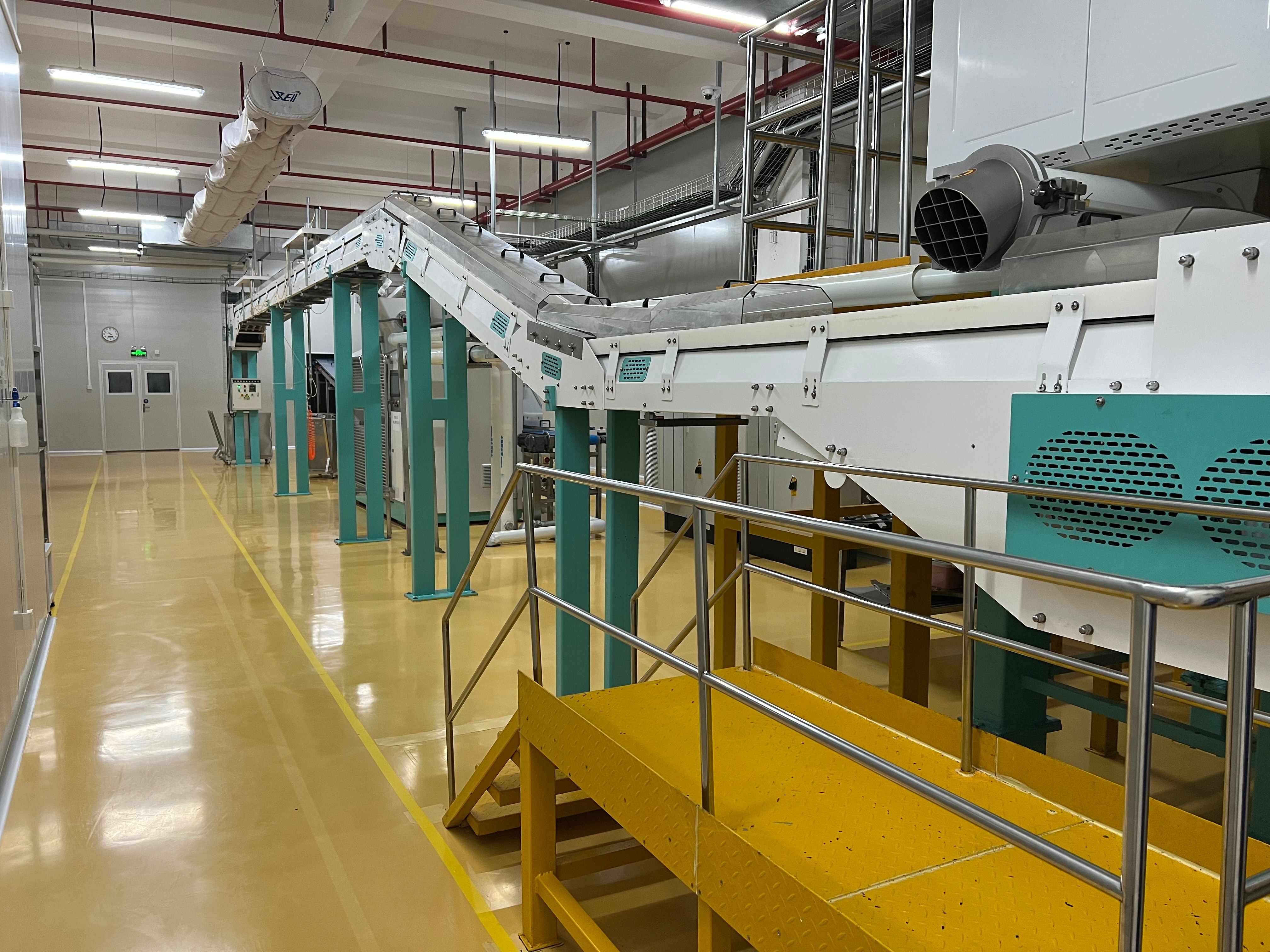
Chocolate steel belt conveyor. Food-facing conveying is where the surface and coating declaration carries the most weight.
Have Questions or Need More Details?
Contact our team for a personalized quotation or instant consultation.
Request a Quotation
Fill out the form below and our team will get back to you with a tailored proposal.
WhatsApp Direct Chat
Prefer to chat in real-time? Message us on WhatsApp for instant assistance & quick answers.
- Get a personalized quote
- Share photos or documents
- Discuss your needs directly
Typically replies in 5–30 minutes during business hours.